Bucatini alle Vongole / Bucatini with Clams
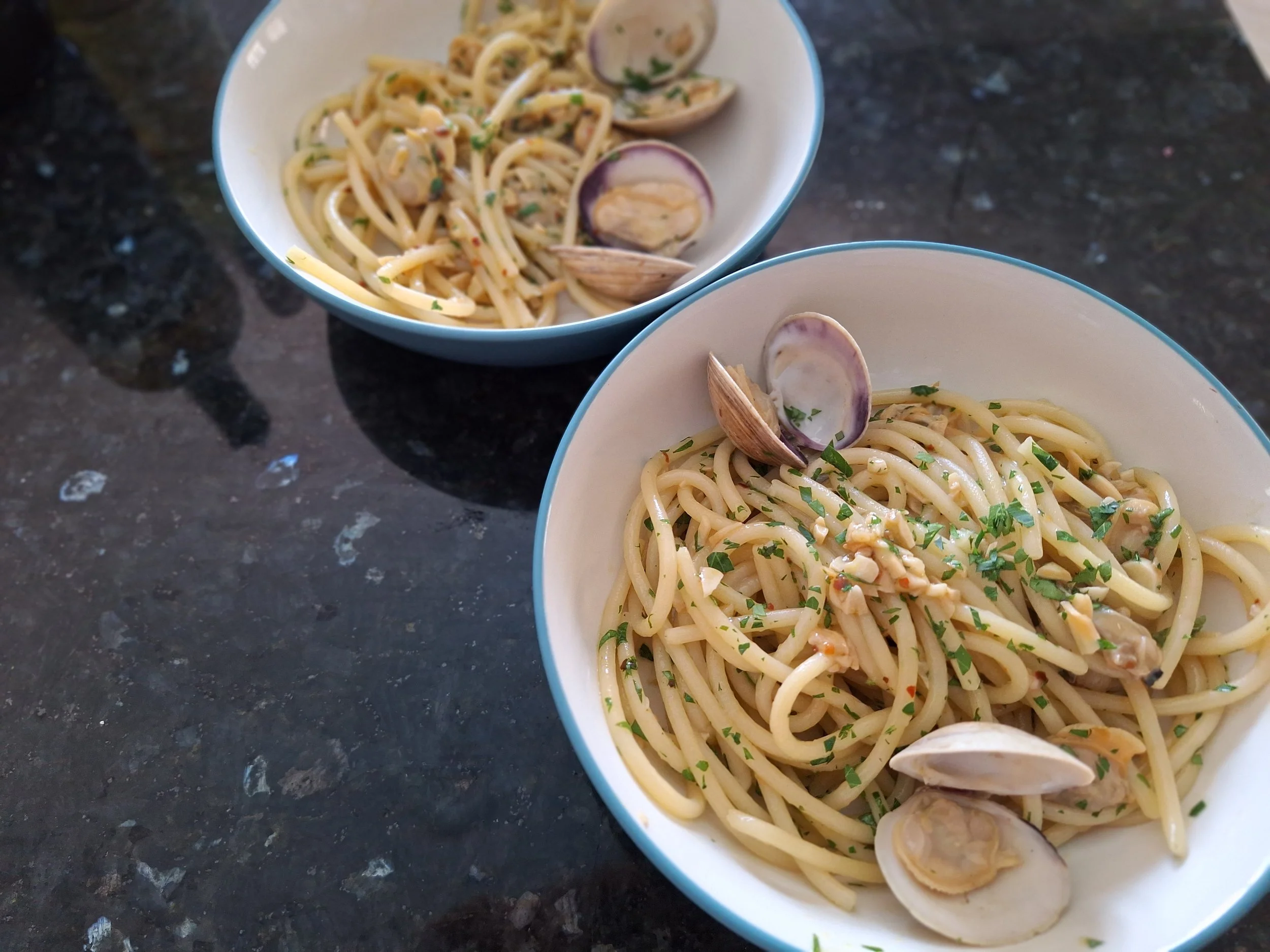
White wine reduction, 10 minute production
Often cooked with spaghetti or linguini, we swap in bucatini here for more bite, and a pasta noodle that can go toe to toe with a slightly sweet, but citrusy white wine clam sauce.
Of course you can sub in the pasta of your choice here, but it is strongly recommended to use a long noodle such as the aforementioned bucatini, spaghetti, or linguini. This is because you want to be able to not only twirl the pasta while grabbing a piece of clam meat with your fork, but you also want a long surface area for that white wine sauce to cling to.
Now, unlike a lot of our red sauces , this comes together quick. I’m talking 10 minutes quick.
Clams steam quickly, and to avoid overcooking and having the clams turn rubbery on you, it is essential to prep everything before starting.
As with the aglio e olio, we’re going to want to finish cooking our pasta in the pan sauce for an extended period of time here.
While we might finish a pasta with a typical red sauce for a minute or two in the pan, a pure pan sauce works better with a few extra minutes to get to know the pasta. So, for this sauce we’re going to pull the pasta from our water just after halfway through cooking. If the box says 10 minutes, we’ll pull it at 6, and transfer the noodles right into the sauce. For thicker noodles between 11 and 13 minutes, pull these out of the water around the 7 minute mark.
Working with Clams: A few things to cover
Fresh Clams or Canned?
Fresh clams are essential here for two reasons. First, we’re essentially making the clam juice as we steam the fresh clams in our wine. Without using fresh clams here, you won’t be able to get that same coastal taste as the basis for your pan sauce.
While not impossible to use canned clams here, it is recommended to use fresh clams in their shells.
The second reason is more aesthetic: When plating, reserving a few clams in shell for presentation offers a nice visual, and also showcases the freshness of the dish.
Cleaning your clams: Essential prep
Fresh clams are going to have some sand or dirt in their shells. To naturally remove this grit, place clams in a large bowl of salted water and let the clams “burp” themselves for about an hour before cooking. If extra gritty, replace the water and repeat. This can be done in the refrigerator.
Once complete, running the clams under some water before cooking should remove any exterior grit or residual salt.
Remember: Clams are alive
Remember that fresh clams are alive. If tapping the shell of a fresh clam, it should slowly draw itself shut. If it doesn’t there is a good chance the clam is no longer living and should be discarded. Don’t worry, we’ll also check for this when we steam them! Any clams that have a cracked shell, or do not open after steaming should also be discarded. Its not uncommon for 1-2 per dozen to have this fate.
What you’ll need
Serves 2
2 TBSP olive oil
12-16 fresh littleneck clams, cleaned
2-4 cloves of garlic, minced
Crushed red pepper to taste
1/2 cup White wine, plus more as needed
Juice of 2 lemons, plus additional lemon to serve with
2 TBSP minced parsley to serve
Additional: Large pan, large pot of salted water to boil pasta
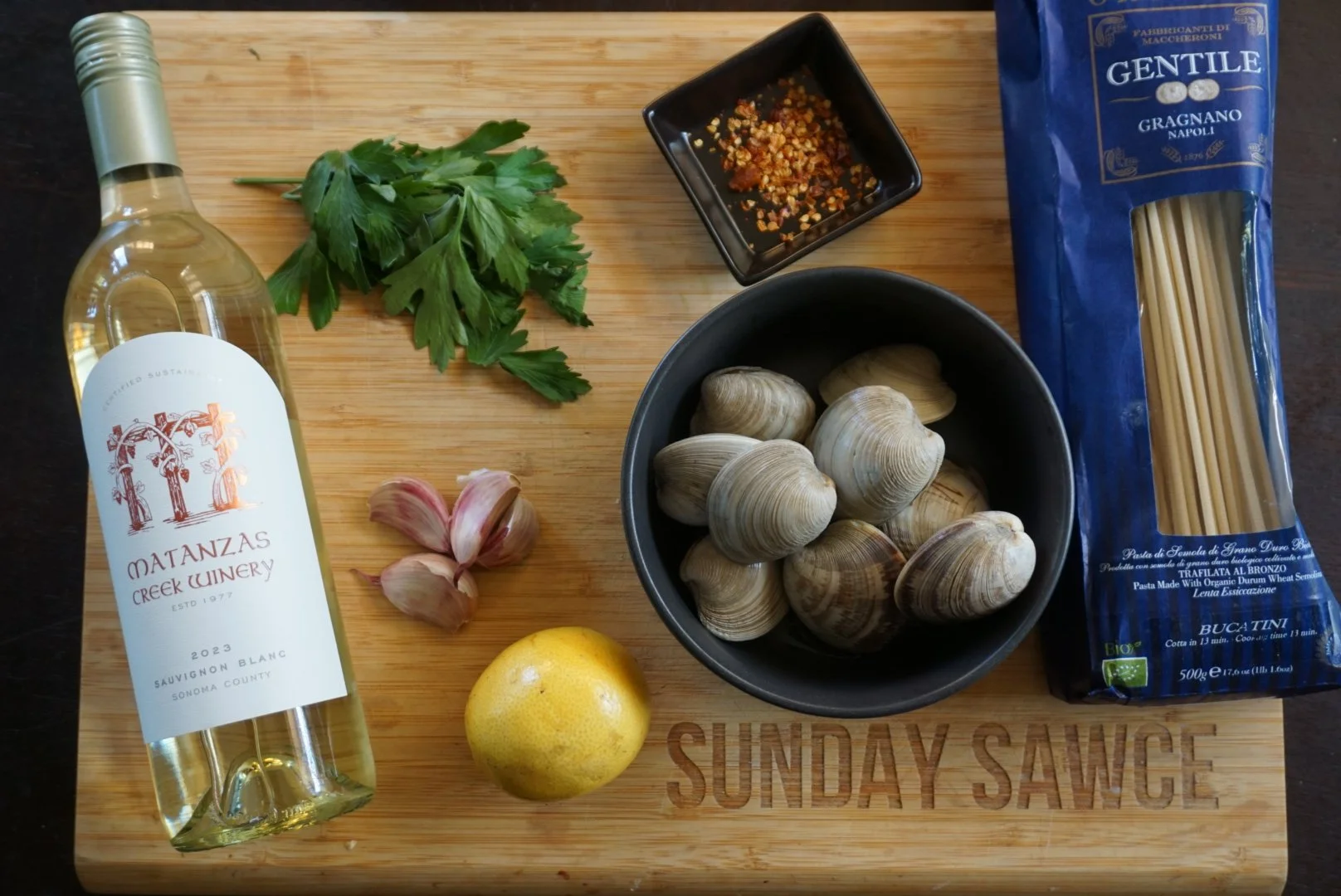
Everything you need
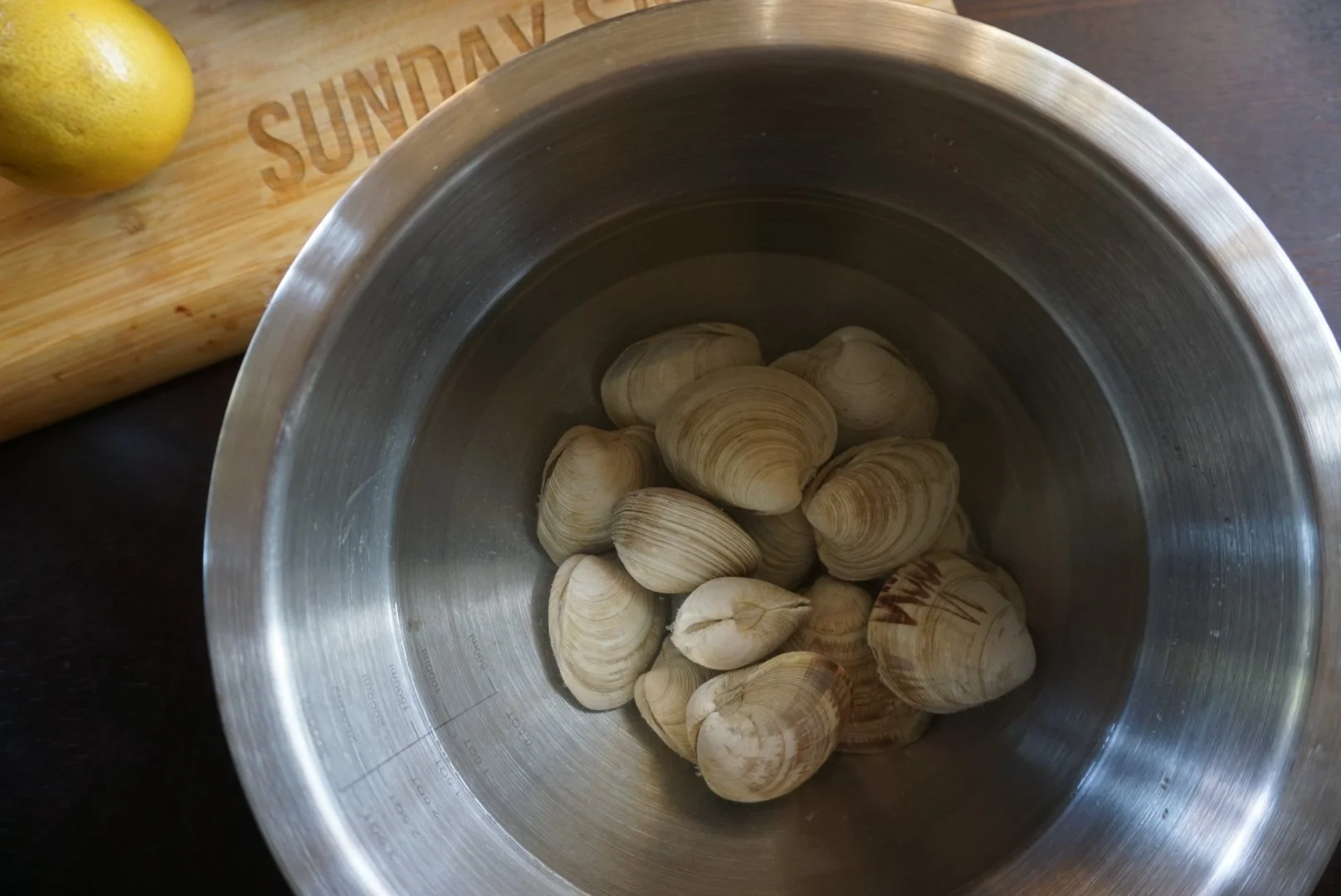
Cleaning the clams in salted water removed any grit or sand from your final dish
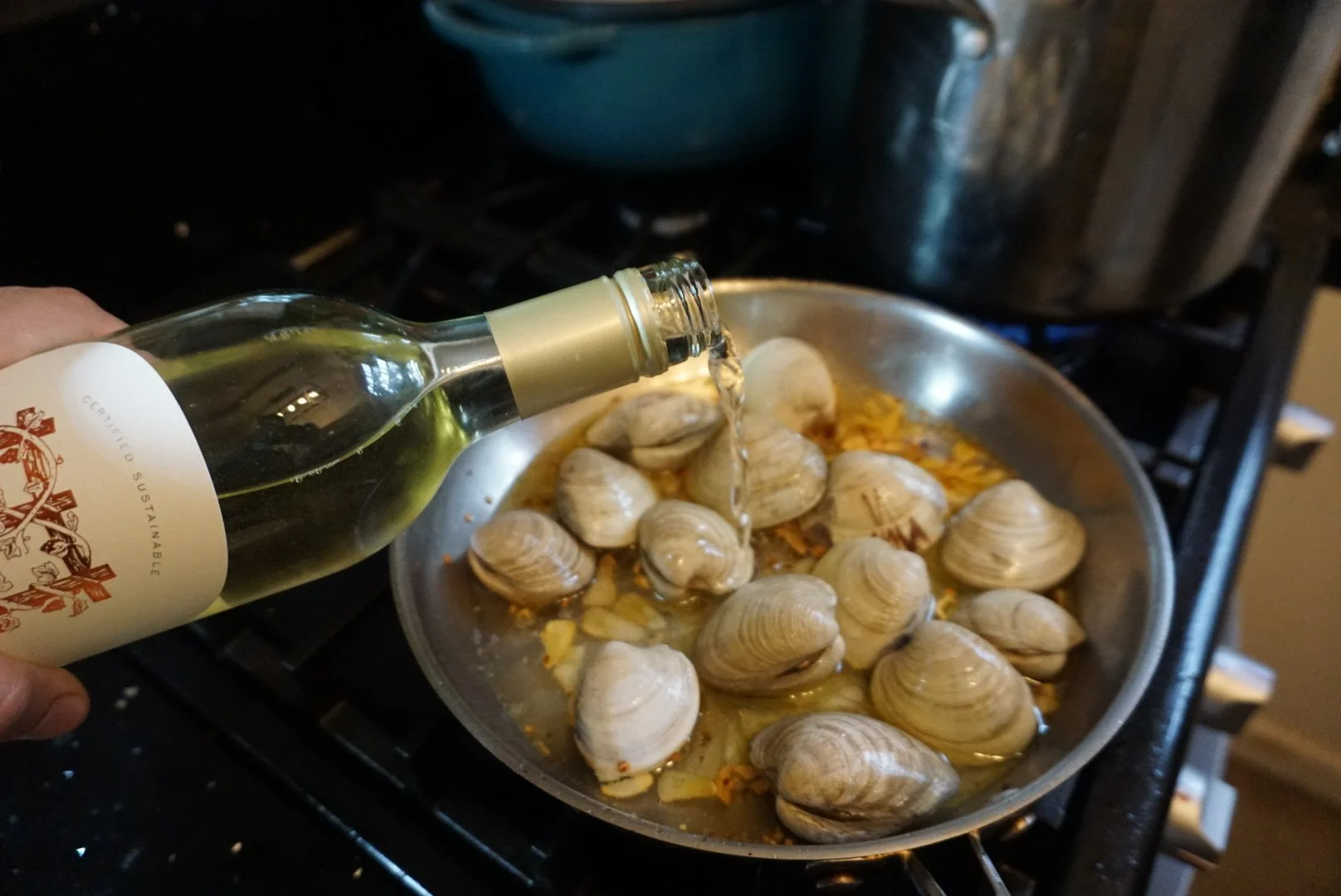
Steam the fresh clams in white wine to create a pan sauce
Lets Do This
An hour before cooking, fill a bowl of salted water clams to remove grit or sand. If extra gritty replace the water and repeat. Plan in the refrigerator as needed. Once clams have expelled all grit, rinse and set aside. Discard any clams with broken shells or that do not close when tapped.
Add water and salt to a large pot and bring to a boil. Add your pasta.
In a large sauce pan over medium heat, add olive oil. When hot add garlic and cook until fragrant and golden, roughly 1 minute. Add chili flakes and cook 30 seconds more.
Add clams to the pan and pour in white wine and lemon juice. You want enough to cover the bottom of the pan to give the clams something to steam in, so if using a large pan it is ok to add more.
Cover the pan with a lid to steam the clams. They should begin opening within 2-5 minutes. Remove clams as they open and set aside. After 5 minutes of clams opening, if any have not opened, discard as they have likely gone bad.
Using tongs, move semi-cooked pasta from the boiling water directly to the sauce pan. If sauce has reduced too much, add a little bit of pasta water and/or wine to finish cooking the pasta.
Gently keep the pasta moving in the pan tossing as it the sauce thickens and coats the pasta.
When pasta has reached al dente, remove from heat.
Remove the now slightly cooled clams from their shells, keeping 2 per plate in their shells for presentation. You can use a small spoon or fork if needed. Toss the clam meat and chopped parsley with the pasta in the pan.
Serving
At this point the sauce should have thickened slightly, and look glossy as it coats the pasta.
To plate, grab tongs, or a carving fork, and twirl the pasta into a tight nest. Place the pasta on a plate and add the remaining 2 clams in shell to the place. Pour over any extra sauce and clams meat onto the dish.
This should be served immediately as the sauce as well as the clams are best eaten warm
Serve with lemon on the side as needed. This meal pairs great with white wine, especially if using a quality wine to build the sauce, as well as some toasted bread to scoop up any additional sauce.
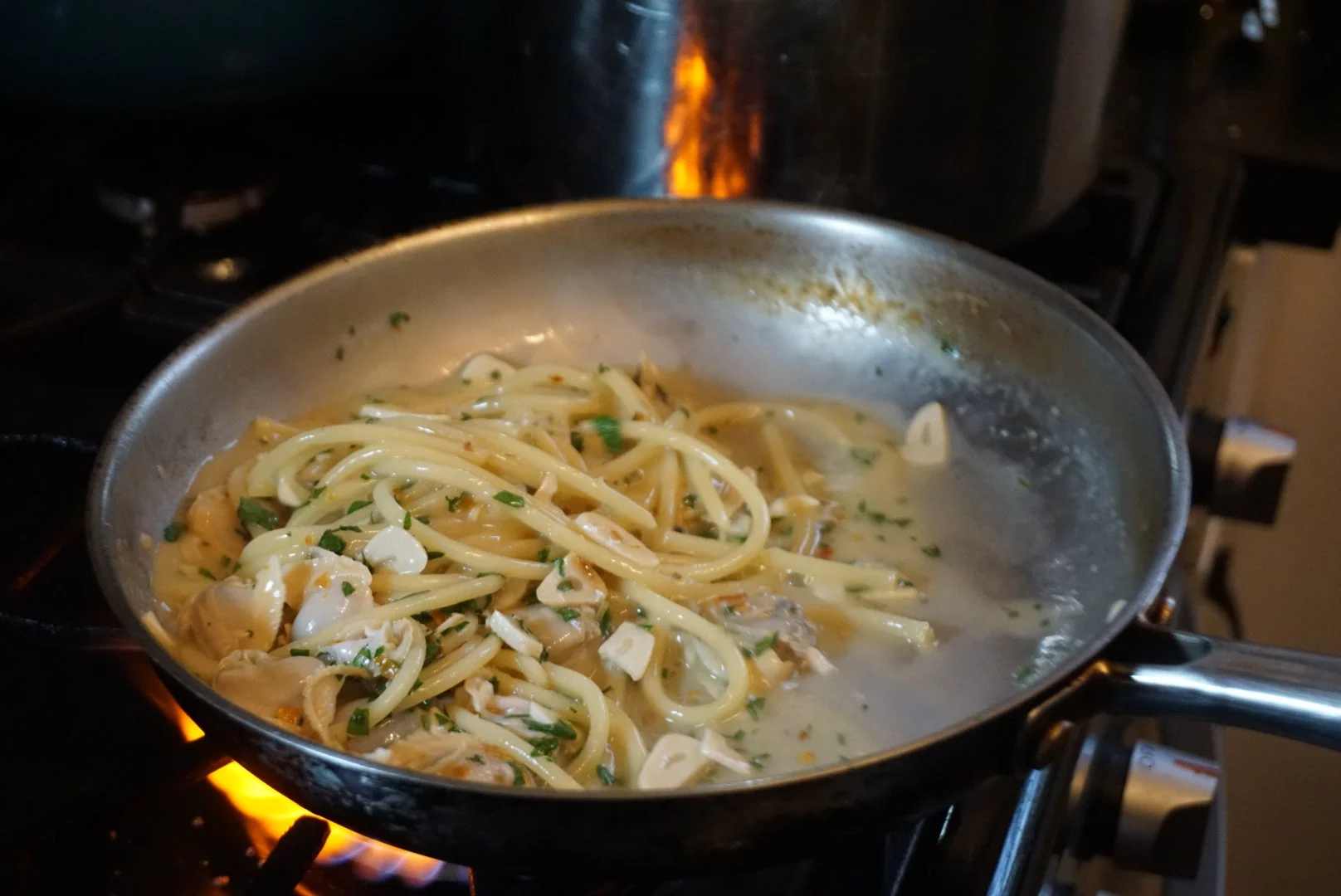
Finishing the pasta in the pan creates a shiny, rich pan sauce that will easily coat the noodles
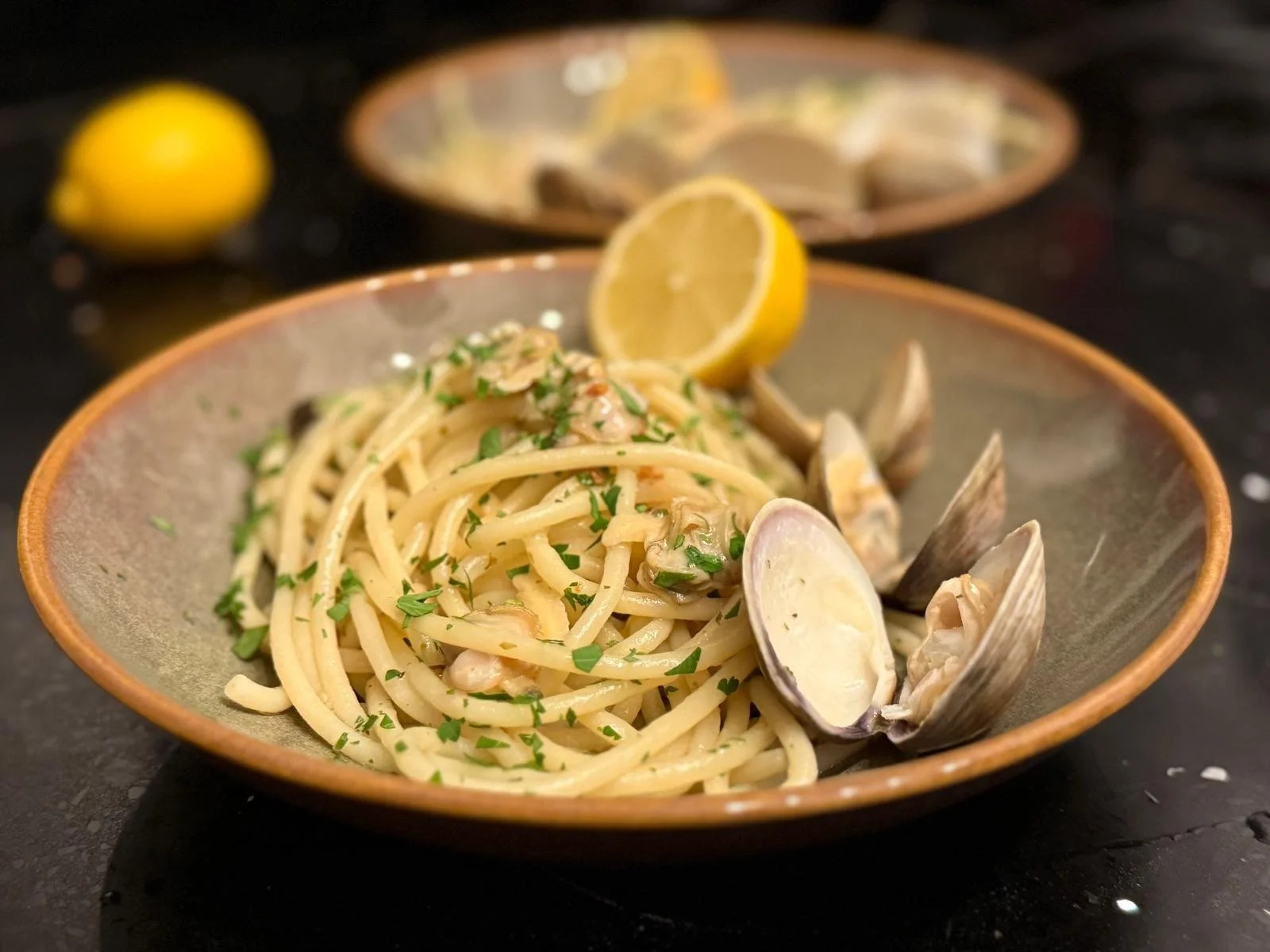
Plate and serve alongside some extra lemon if needed
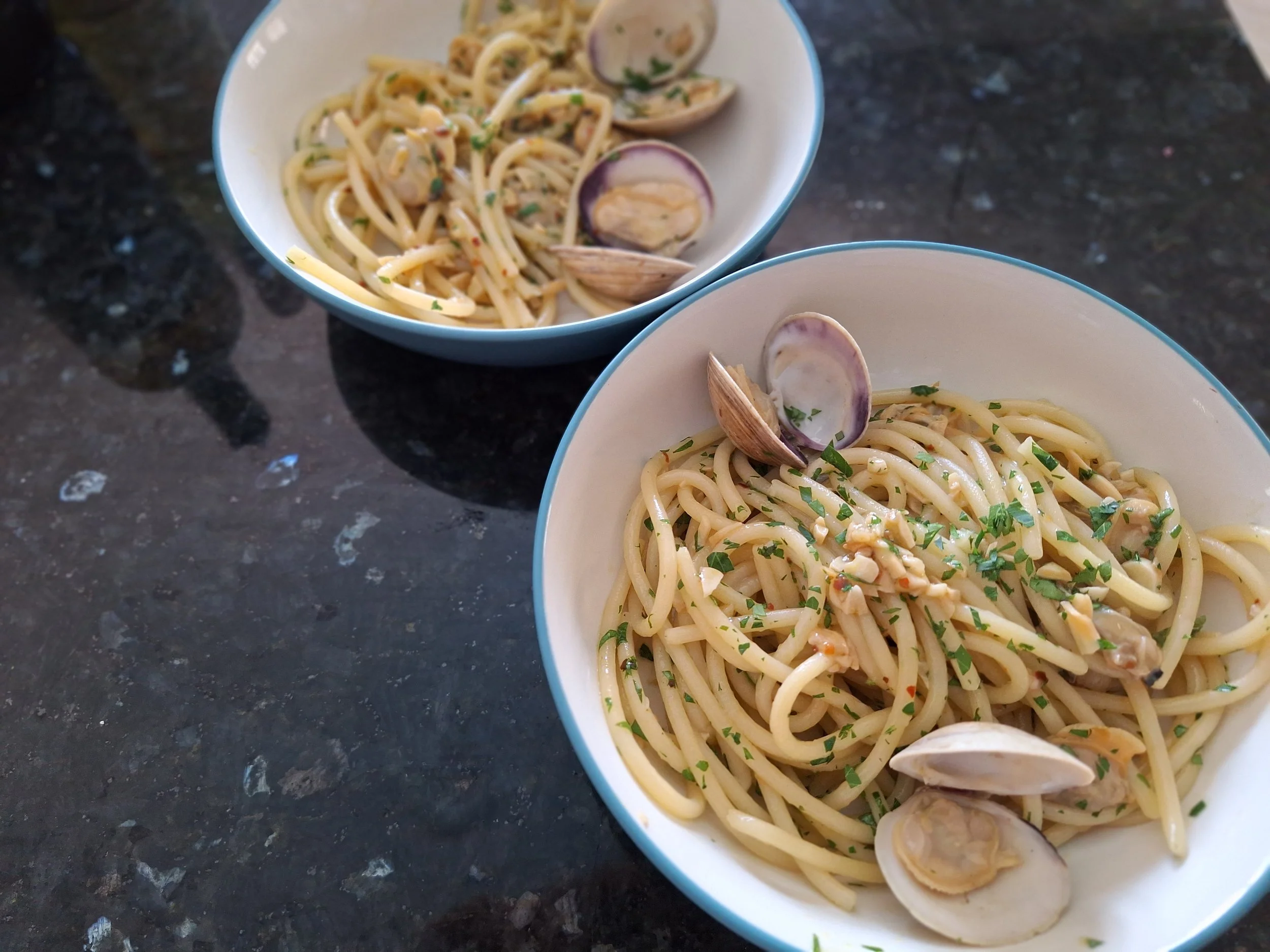
Add the additional shell in clams to highlight the freshness of the dish